For many Australians living with mobility impairments, a wheelchair is far more than a tool for transport; it is an essential extension of the body. It facilitates independence, enables workplace participation and fosters social connection. However, the physical relationship between a person and their chair is governed by complex biomechanical principles. When these principles are ignored, the result is often chronic pain and fatigue. Understanding the science of seating is the first step in ensuring that manual wheelchairs provide the comfort and support necessary for a high quality of life.
The Biomechanics of Posture
At the heart of seating science is the concept of postural stability. Effective seating starts with the pelvis, often referred to by clinicians as the ‘foundation’ of the body.
If the pelvis is tilted too far forward or backward, it creates a ripple effect up the spine and down to the lower extremities. In the context of manual wheelchairs, a poorly positioned pelvis can lead to a ‘slumped’ posture, which restricts lung capacity and makes it significantly harder to engage the upper-body muscles required for propulsion.
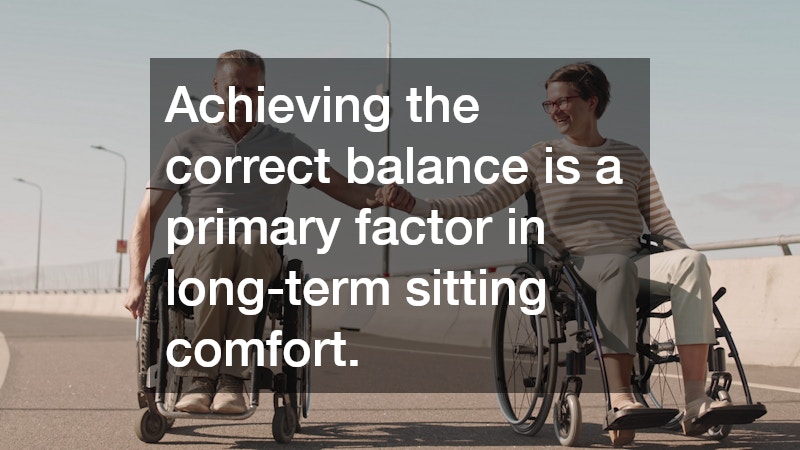
The ‘science’ enters the frame when we look at the specific angles of the seat and backrest. A slight rearward tilt of the seat—commonly known as ‘dump’ or ‘rake’—can help secure the pelvis and provide better balance for users with limited trunk control. However, the degree of this angle must be calculated with precision. Too much tilt can increase pressure on the sacrum, while too little can leave the user feeling as though they are sliding out of the chair. Achieving the correct balance is a primary factor in long-term sitting comfort.
Ergonomics in Motion
Comfort in a manual chair is not a static concept. Because the user is also the engine, the chair must be configured to allow for efficient movement. This is where the alignment of the rear axle becomes crucial. In high-performance manual wheelchairs, the axle is often adjustable. Moving the axle forward reduces the rolling resistance and makes the chair easier to turn, which decreases the strain on the user’s shoulders and wrists.
However, moving the axle too far forward makes the chair ‘tippy’. The science of seating requires finding the exact point where the user can propel themselves with the least amount of effort while maintaining enough stability to feel safe. When the chair is tuned to the user’s specific arm length and strength, the repetitive motion of pushing becomes less taxing, preventing the ‘wheelchair shoulder’ injuries that often plague long-term users.
The Role of the Backrest
The backrest plays a dual role: it provides support and allows for movement. For an active user, a backrest that is too high can interfere with the movement of the shoulder blades, hindering a full, powerful push stroke. Conversely, a backrest that is too low may lead to premature fatigue of the core muscles.
Modern Australian clinical practice emphasises ‘contoured’ backrests. Unlike the sling upholstery found on basic models, contoured backrests provide lateral support, helping to keep the user centred in the chair. This reduces the need for the user to constantly shift their weight or use their arms to ‘prop’ themselves up, freeing their hands for more important tasks and significantly increasing overall daily comfort.
The Microclimate: Heat & Moisture
A often-overlooked branch of seating science is the study of the microclimate. This refers to the temperature and humidity at the interface between the user’s skin and the cushion surface. Excess heat and moisture (usually from perspiration) soften the skin, making it more susceptible to damage from friction and shear.
Advanced seating systems now incorporate ‘breathable’ cover materials and ‘spacer’ fabrics that promote airflow. By keeping the skin cool and dry, these designs prevent the discomfort of overheating and lower the risk of skin breakdown, proving that comfort is as much about biology as it is about mechanical engineering.
A Tailored Approach
The most important takeaway from the science of seating is that there is no ‘one size fits all’ solution. Every individual has a unique anatomy, a unique lifestyle and unique functional goals. A chair that is comfortable for a para-athlete will likely be unsuitable for an elderly person recovering from a stroke.
In Australia, the collaboration between the user, their occupational therapist and the wheelchair technician is vital. This multidisciplinary approach ensures that the physics of the chair are perfectly aligned with the physiology of the human sitting in it. When the science is applied correctly, the wheelchair ceases to be a burden and becomes a liberating tool that supports a life lived with comfort, dignity and ease.